Airbnb Housing Accelerator white paper

Executive summary
For too many, it feels harder than ever to afford everyday expenses and to get ahead—and the cost of housing is a big reason why. Paying rent is a monthly struggle, and the dream of owning a home feels out of reach.
At Airbnb, housing affordability is in our DNA. In 2007, our co-founders were struggling to pay rent. Meanwhile, a design conference was coming to San Francisco and hotels across the city were sold out. So they inflated three airbeds and rented them out to Michael, Kat, and Amol, who wanted to attend the conference but didn’t have a place to stay.
Today, Airbnb is one of the only tools many people have to afford the homes they already have. The typical host in the United States earned $15,600 last year on Airbnb:1 that’s roughly $1,300 per month and around two-thirds of a typical annual mortgage payment. For some, it’s the difference between paying their bills and being evicted or losing their home.
Beyond helping people afford the home they already have, it is critical that policymakers, governments, nonprofit organizations, and the private sector take action to make it easier for people to afford a home in the first place. The biggest reason homes are too expensive is because we haven’t built enough of them in recent decades. In the 1970s, the United States built 7.9 homes per 1,000 people; today it’s 4.3 homes. In the US alone, some experts estimate that there is a shortfall of more than 5 million homes. That makes existing homes more expensive—contributing to why nearly half of all US renters pay more than 30% of their income in rent and utilities. The typical home now costs five times the typical family income, two-thirds more than in 1990.
At Airbnb, we want to be part of the solution. Building on years of engagement with housing policy experts, community leaders, and policymakers, including our work with the Airbnb Housing Council, we have learned the following:
- Right now, there are 750,000 multifamily homes across the US that are ready to be built but are short of the final financing commitment they need to move forward.
- We need more than additional financing to get even more projects to move forward. That’s why local leaders are working to change outdated and inefficient rules and regulations that make it too hard to build new housing.
- Imagine a world where offsite construction, transportation, and assembly of starter homes were possible for a fraction of today’s cost. Innovators and technology experts are building and testing new technologies to make residential construction easier, faster, and more cost-effective.
- New technologies are beginning to enable researchers to bring a higher degree of analytical rigor to understanding what policies help build more housing and where the greatest opportunities and challenges lie.
The Airbnb Housing Accelerator is our initiative to seize these opportunities, build more housing, and help more people afford a home. Through the Accelerator, we will:
- Unlock $5 billion over the next decade to build more housing: Across the country, developers have raised millions of dollars and cleared most of the regulatory hurdles to build new housing. But for a variety of reasons, they’re stuck on the one-yard line. We will invest $250 million in housing projects that need last-dollar financing, which we expect will unlock more than $5 billion in capital to build more housing over the next ten years. And we’ll reinvest the proceeds from the initial investments into building even more housing. There is no requirement or expectation that any of these investments will create listings that are shared on Airbnb. For example, Airbnb’s first investment in Austin will support the construction of a 201-unit apartment building that will be 100% income- and rent-restricted. Short-term rentals are not permitted in these units.
- Push for smart reforms in communities that more than 100 million Americans call home: We will support community leaders fighting to enact pro-housing reforms—like zoning, permitting, and building code reforms—across five states in 2026, and even more in the years ahead. One analysis found that these kinds of changes created thousands more units of housing in just a few neighborhoods in New York and Philadelphia; we want to expand that effect in communities across the country.
- Create the $5 million Airbnb Housing Innovation Prize: We are creating an annual $1 million prize over the next five years to support innovative companies and nonprofits that are using technology to make it easier, faster, and cheaper to build a home. The prize will target the hardest and most neglected moment in a venture’s life: after proof of concept and before scale. We will consider ventures pursuing technology concepts that advance offsite construction like panelized and modular designs, 3-D printing technologies for residential real estate, AI applications for permitting, design, and code compliance, adaptive reuse technologies, and innovations to lower the cost and increase the efficiency of building materials, among others. The ultimate goal is to unlock new ideas that will help millions of people find a home they can afford.
- Build the Airbnb City Index: We are building a first-of-its-kind dataset designed to give researchers, advocates, and policymakers a window into the state of housing policies and outcomes in different cities. The Index will cover outcomes like housing additions and affordability measures, as well as the policy choices that drive them. We will publish an annual editorial ranking identifying the cities successfully adding housing and tackling affordability challenges.
The housing crisis is a massive challenge, and there is no one-size-fits-all solution. And while the data is clear that Airbnb is not a significant contributor to the housing crisis, we know we’re part of the debate.
No single group of people, organization, local government, or company can solve the housing affordability challenge on its own. But at Airbnb, we want to make a difference—with an initial focus on the US housing crisis and then, in the years ahead, expanding our efforts into other parts of the world. The Airbnb Housing Accelerator is our attempt to do that, and we’ll keep learning and doubling down on what works.

Part one - the Airbnb community
The Airbnb community includes over 5.5 million hosts in more than 220 countries and regions around the world. Globally, almost half of hosts say the income they earn from hosting helps them afford to stay in their homes. Roughly a quarter of Airbnb hosts say they are retired. Of hosts who work part-time or full-time, more than 20% work in health care or education and social services.2
In the United States last year:
- Three in four hosts shared one home, with the typical host welcoming guests for a few days a month.
- A typical host earned $15,600.
- Travel on Airbnb contributed an estimated $93 billion to GDP and supported over
one million jobs.3
Part two - investing in more housing
New housing construction in the US has declined substantially from the 1970s, despite having double the number of households today. That failure to build and the resulting housing shortfall drives up costs. Nearly half of all US renters pay more than 30% of their income in rent and utilities. While median household incomes in the US have increased nearly 100% from 2000 to 2025, rents have increased by 145%. Purchasing a home has also become increasingly difficult: the typical home has now reached a near-record cost of five times the typical family income, up from three times in 1990.
In 2026, Airbnb will begin investing $250 million that we expect to unlock more than $5 billion in capital to build more housing over the next ten years. Specifically, Airbnb will focus its investments on developing quality housing options—including for families with low and moderate incomes—near areas of economic opportunity.
Our approach is focused on last-dollar financing: the projects we support will have secured most of their funding sources but still need incremental low-cost capital to be able to move forward. Airbnb will invest in projects with an expectation of returns of at least 50% below standard investor rates of return. Without Airbnb’s funding, these projects would likely never get built because the projects wouldn’t cover the costs or returns that traditional financing requires.
Our investments are about helping to solve the housing crisis, not about increasing the number of Airbnb listings. There is no requirement or expectation that any of these investments will create listings that are shared on Airbnb.
Estimates indicate that there are a substantial number of projects seeking last-dollar financing in the housing pipeline. Research commissioned by Airbnb and conducted by the Center for Public Enterprise estimates that 750,000 housing units have cleared the most difficult regulatory hurdles but are currently stalled. This “shadow pipeline” of stalled projects represents somewhere between $225 and $265 billion in potential investment—a quarter trillion dollars’ worth of housing that could help reduce the overall housing shortage and give more families access to stable, affordable homes.
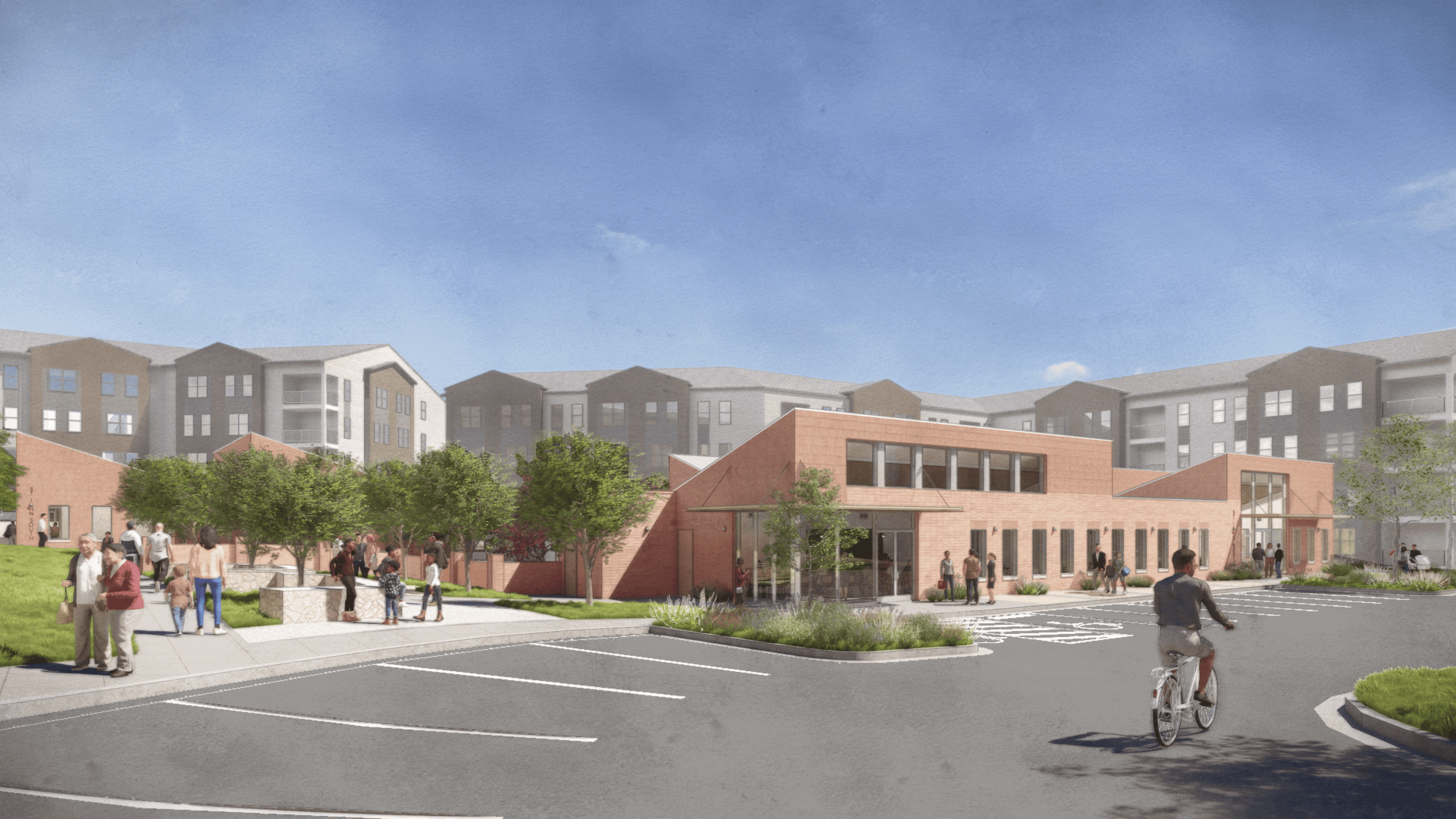
We will begin with a $6.4 million investment in the St. John Redevelopment project in Austin, Texas. Formerly home to a Home Depot and a Chrysler dealership, the St. John Redevelopment project at 800 E. St. John Avenue in Austin is a public-private partnership in a historically underserved community. Airbnb’s investment will support the creation of 201 units of affordable housing. Under an agreement with the City of Austin, this fully affordable project was necessary in order to build a companion project with 325 units of mixed-income housing, which is expected to open at the same time. Combined, St. John will include more than 500 units of housing, plus retail, a park, and public art.
Over the weeks and months ahead, we will consider a range of additional investment opportunities that are consistent with this approach, beginning here in the United States and ultimately moving into other countries as well.
Beyond our $250 million commitment to new residential construction, we have committed an additional $50 million over the next three years in small villages across Spain to restore and modernize homes, support local businesses and tourism, and enhance cultural landmarks. In addition to returning homes to the market, these investments will help drive interest in and awareness of travel and tourism opportunities in Spanish communities that many travelers typically miss. As the Housing Accelerator expands, we will similarly look for ways to tailor our housing investment approach to other global markets where the housing needs are substantial but different from those in the United States.
These efforts build on past Airbnb initiatives to support housing affordability. Airbnb’s Community Impact Investment Program has invested $100 million in affordable homeownership programs and enabled access to affordable mortgages for nearly 500 low-to-moderate income families in San Francisco, Los Angeles, New York City, Chicago, Richmond, Austin, Nashville, and Atlanta.

Part three - new policies that help communities build more housing
Airbnb is committed to investing in building homes because meaningfully boosting housing supply and lowering housing costs for working families requires public, private, and philanthropic investment. But we recognize that more investment isn’t enough. Durable change requires meaningfully reforming federal, state, and local rules to make it easier, faster, and cheaper to build housing. That’s why we are partnering with organizations in states around the country that are fighting to change the rules to make it easier to build more housing in more places.
Some jurisdictions have prioritized policies like restricting short-term rentals instead of much-needed comprehensive reforms. Experts agree that short-term rental restrictions are not a meaningful or effective way to solve the housing crisis. This is in part because units of housing shared on a short-term basis represent a small fraction of the housing stock. For example, in the United States last year, entire-home listings on Airbnb that were booked for more than 90 nights accounted for just 0.3% of housing units.
Experience has also shown that punitive short-term rental restrictions do not make housing more available or more affordable. Indeed, following the introduction of short-term rental restrictions in New York, rents in the city increased and vacancy rates were flat. Similarly, the implementation of restrictive short-term rental rules in
both Amsterdam and Barcelona has not resulted in lower average long-term rents.
The Airbnb Housing Accelerator will focus on advocating for durable and effective solutions that will lead to more housing and more affordable home prices and rents. In 2024, we developed the Airbnb Housing Council, composed of housing advocates, experts, researchers, and policymakers, to help guide our perspective on policy reforms that will address housing supply and affordability issues. Informed by our work with the Council and our ongoing engagement with local organizations, experts, and partners, we are prioritizing housing policy advocacy in four areas:
Permitting Reform
In cities and states across the country, complex permitting processes and delays can add years and tens of thousands of dollars to the cost of developing a new home. These costs and delays contribute to higher rents and home prices, directly burdening working families. To build more housing and reduce costs, many cities are
comprehensively reviewing and streamlining permitting processes to unlock new housing opportunities. This work includes setting measurable goals for reducing the time it takes to permit housing projects.
For example, in 2024, Florida passed a new law requiring local governments to approve or deny complete housing permit applications within 120 days. While most of the housing permitting process occurs at the local level, the 21st Century Road to Housing Act (a bill that Airbnb supported) includes provisions to streamline federal permitting processes for affordable housing projects that receive federal funding.
We are proud to partner with organizations working to promote permitting reforms that will speed housing construction and lower housing costs, including the Florida Housing Coalition, which is working with local governments to speed the process to build housing on land owned by religious institutions.
Zoning Reform
Restrictive zoning rules inflate housing prices and limit regional and national economic growth. To build more housing, states and cities should modernize their zoning rules to allow for increased density, including the construction of lower-cost homes on smaller lots, accessory dwelling units, “missing middle” housing like 2-10 unit buildings, and larger, multifamily housing.

Zoning code modernization also could include reexamining land-use rules that have the effect of limiting housing construction, such as burdensome parking or setback requirements, limits on residential construction in commercial zones, and policies that make it difficult to develop or convert underutilized or unused land and
buildings. There is a particular need to modernize zoning rules in neighborhoods where housing demand is highest, like areas close to transit options, attractive economic opportunities and jobs, and good schools.
In recent years, cities, states, and the federal government have taken important, initial steps on this front. For example, Chicago recently allowed accessory dwelling units to be built citywide. California and Washington state each enacted reforms in 2025 that require local governments to allow multifamily housing to be built near
transit stops. Additionally, Texas recently enacted a new bill that prohibits cities from mposing unreasonably large lot-size requirements. At the federal level, the recently passed 21st Century Road to Housing Act directs the Department of Housing and Urban Development to produce best practices and guidance on zoning and land-use reforms.
We hope local, state, and federal leaders will continue to build on this progress with policies that work for their communities. We will continue to support organizations working to promote zoning reforms that will lead to more housing construction and lower housing costs like the Citizens’ Housing and Planning Association of
Massachusetts, which is fighting for legislation that allows “missing middle” housing to be built in more areas, and YIMBY Action, a national organization advocating for zoning reform.
Simplified Building Codes
While many building code requirements promote the health, safety, and environmental well-being of residents, some outdated requirements can add costs without achieving the intended public benefit. To that end, many experts have urged cities to review their building codes to examine where policies might be having unintended consequences when it comes to the cost and availability of housing, and adopt unified development codes or pre-approved designs that make it easier, faster, and more cost-effective to build housing.
This work has begun in some communities. In 2022, the city of South Bend, Indiana, launched an online catalog of pre-approved building plans for various types of housing, aligned to local zoning regulations and building codes. In 2025, Colorado passed legislation that requires certain localities to modify their building codes to allow multifamily buildings up to five floors to be served by a single exit. At the federal level, the 21st Century Road to Housing Act directs the Department of Housing and Urban Development to award grants to establish “pattern books” of pre-reviewed designs to make it easier to build code-compliant housing.
Limiting Upfront Impact Fees
One contributor to the cost of housing development are impact fees that builders and developers must pay on the construction of new housing or even on the rehabilitation or conversion of older buildings. These fees, which in California can exceed $100,000 per unit, may include school fees, infrastructure fees, park fees, traffic impact fees, water and sewer fees, and other utility connection fees.
Once construction is complete, these fees are typically passed on to renters and homebuyers in the form of higher rents and home prices, in addition to preventing some housing from being built in the first place. In affordable housing projects, the fees are covered by scarce subsidy resources that could be used for other developments. A recent study from the UC Berkeley Terner Center for Housing Innovation estimated that 1,250 additional homes per year would have been built in California alone if impact fees were not assessed.
Eliminating, or reducing, the assessment of fees during the construction process helps communities build more housing, at lower cost. Policies that eliminate fees entirely for conversion and rehabilitation projects should also be considered, given that these projects typically don’t increase infrastructure needs. For example, San Antonio and Austin, Texas, both waive or reduce a number of impact fees for affordable housing projects, and the state of Texas last year passed legislation to prohibit cities from charging impact fees for road use when building housing on land formerly zoned for commercial use.
In California, Airbnb has partnered with the Housing Action Coalition, a statewide organization fighting to make housing more affordable and accessible. The Housing Action Coalition works to reform a range of housing laws across the state, including harmful impact fees that unintentionally slow or prevent the construction of more
housing.

Part four - the Airbnb Housing Innovation Prize
Investment and policy reforms tackle the housing shortage with today’s tools. But building enough homes over the long run will also require better tools—new ways to design, finance, and construct housing that are faster and cheaper than what we have now. Across the country and around the world, innovators are developing exactly these breakthroughs. Too often, though, their most promising ideas stall out at a specific and predictable moment: after they have proven their concept works, but before they have reached the scale where the impact is felt.
This is not a failure of merit. A venture that has validated a new approach to modular construction or a cheaper path to code compliance is a fundamentally different proposition from a high-margin software company—and traditional venture capital, which depends on outsized returns from a handful of bets, is not built to fund it. The
result is a gap that leaves some of the most promising housing innovations stranded precisely when they are ready to grow.
That is the gap the Airbnb Housing Innovation Prize is designed to fill. Airbnb will award an annual prize of $1 million over the next five years—$5 million in total—to support innovators who are using technology to make it easier, faster, and cheaper to build a home. The prize deliberately targets the hardest and most neglected moment in a venture’s life: after proof of concept and before scale. Airbnb is well-suited to support work at this stage because of our expertise in technology and housing, and because we are seeking real-world housing impact.
The prize will welcome applicants innovating in a wide range of technologies, including but not limited to offsite construction techniques like panelized and modular design, 3-D printing for residential real estate, AI applications for permitting, design, and code compliance, adaptive reuse technologies, and advances that lower
the cost and improve the efficiency of building materials. What matters is not the category of innovation but that it works, that it is ready to grow, and that it can help millions of people find a home they can afford.

Part five - the Airbnb City Index
Investment, policy reform, and innovation are powerful levers for addressing the housing crisis—but progress on each depends on having a clear, comparable, and honest picture of which cities are actually doing the work to build more housing, and which are not.
Today, the data needed to evaluate cities on housing performance is fragmented across hundreds of sources, collected in different ways, and rarely made comparable across jurisdictions. Researchers, advocates, policymakers, and journalists who want to understand what is working and what is not are left without the tools to draw clear conclusions. Without that clarity, accountability is impossible, and the cities making real progress on housing too often go unrecognized—while the cities holding back progress face little public scrutiny.
That is why Airbnb is announcing our plan to launch the Airbnb City Index: an annual, data-driven ranking of cities on their housing policies and outcomes. The Index will cover outcomes like housing additions per capita and affordability measures, in addition to the rules that enable or hinder housing production.
The Index will be built on two products. The first is a harmonized dataset on housing performance across cities, covering both outcome-based metrics, like housing additions per capita and rent-to-income ratios, and process-based metrics, such as the degree to which regulatory frictions prevent housing from being built. By releasing this dataset openly, we hope to enable the public to draw their own conclusions and build their own analyses. The second is an annual editorial ranking reflecting Airbnb’s data-based analysis that highlights the cities making the greatest strides, the cities showing the strongest improvement, and the degree to which local rules enable or hinder housing production.
There are a number of obstacles to building a tool like this: the data is fragmented, the methodological choices are complex, it is challenging to design an interface that appeals to technical researchers and the general population alike, and traditional research funding doesn’t reward dataset-building. Airbnb is uniquely positioned to overcome these obstacles by dedicating the resources and technical talent needed to build the underlying data infrastructure, working closely with leading housing researchers, data analysts, and housing advocates.

Conclusion
The housing crisis has been decades in the making, and it won’t be solved overnight or by any single company, organization, or government. But the path forward is clearer than it can sometimes seem: we have to build more homes, change the rules that make building harder than it should be, invent better and cheaper ways to construct housing, and measure more clearly what’s actually working.
The Airbnb Housing Accelerator is our commitment to that path—unlocking billions in new construction financing, championing reforms in communities more than 100 million Americans call home, rewarding the innovators reimagining how homes get built, and giving everyone a clearer view of which cities are rising to the challenge.
We don’t pretend to have all the answers, and we know what works in one place won’t always work in another. But we believe Airbnb is uniquely positioned to help—rooted in a community of hosts who depend on their homes to make ends meet, and often motivated by the same struggle to afford a place to live that led to our founding nearly two decades ago. We’ll keep investing, keep learning, and keep doubling down on what works, because everyone deserves a home they can afford.
1Airbnb data for 2025. “Typical” refers to the median.
2Self-reported through a survey to the Airbnb community from September 1, 2025 through August 31, 2026.
3Estimated economic impact based on an internal analysis using the IMPLAN economic impact model, which
assesses direct, indirect, and induced economic activity.